The EU-Mercosur Partnership Agreement (EMPA)
After more than two decades of often turbulent negotiations, the EU and the four Mercosur countries Argentina, Brazil, Paraguay, and Uruguay (the fifth member, Venezuela, is currently suspended) reached a political agreement with the EU at the end of 2024. On 17 January 2026, the agreement, known in English as the EU-Mercosur Partnership Agreement (EMPA for short), was officially signed. The term “Mercosur” stands for Mercado Común del Sur (in English: Southern Common Market). With its current four member states, the new agreement represents one of the largest trade agreements the EU has ever concluded. The EMPA creates the basis for the world’s largest free trade area between two economic blocs with more than 700 million people and considerable significance in terms of raw materials and agriculture. However, a referral to the ECJ by the EU Parliament on 21 January 2026, could delay its implementation by up to two years.
While the EU will receive tariff advantages, particularly in the machinery, automotive, pharmaceutical, and chemical sectors, the Mercosur countries will also open up access to a market of over 260 million consumers and to strategic raw materials such as lithium, copper, and iron. In contrast, the Mercosur countries will benefit primarily from larger export quotas in the agricultural sector, especially for meat, sugar, honey, rice, and soy.
Strategic importance of the agreement
For the EU, the EU–Mercosur Agreement (EMPA) is of considerable geopolitical significance. On the one hand, it strengthens economic ties with South America at a time when Europe must open up new markets and reduce its dependencies on the United States and China. The global economic environment and increasingly protectionist developments in the United States underscore the need to broaden the EU’s strategic trade policy.
On the other hand, the EMPA serves as an instrument for securing access to critical raw materials. The Mercosur region possesses key minerals that are indispensable for Europe’s energy transition – particularly for battery technologies and renewable energy. Improved access to these resources enhances the EU’s capacity to act in international competition.
Finally, the agreement is intended to promote sustainable development. A modernized sustainability framework, including references to the Paris Climate Agreement and rules to combat deforestation, has been incorporated. These adjustments address core European concerns raised over recent years.
Key economic content of the EMPA
The EU will receive:
- broad market access in the industrial sector, including vehicle manufacturing, mechanical engineering, pharmaceuticals, and chemicals,
- more stable regulatory conditions and intellectual property protection,
- the removal of technical barriers to trade and simplified customs procedures, and
- access to critical raw materials for the transformation of European industry.
In return, the EU is granting Mercosur exporters additional quotas for agricultural products, particularly in the meat and poultry sector. While these concessions are economically limited, they are politically highly controversial, as European farmers fear competitive disadvantages stemming from the highly efficient agricultural industries of the Mercosur countries.
Benefits for EU industry – focus on Germany
As Europe’s largest industrial nation, Germany is one of the main beneficiaries of the EMPA. The Mercosur region is already an important sales market for the automotive industry. The planned reduction in customs duties will strengthen the competitiveness of German vehicles and vehicle parts, particularly in the two largest countries, Brazil and Argentina. The agreement also facilitates market conditions for suppliers and OEM production.
South America is one of the traditional growth markets for German mechanical engineering companies. Simplified technical standards and tariff reductions will make exports considerably easier.
Brazil and Argentina are also important customers for the chemical industry for primary and intermediate products. However, the improved regulations on the protection of intellectual property rights and market opening will not only support German chemical companies, but all IP-intensive industries, such as the food and beverage industries (due to geographical indications of origin), as well as the technology, fashion, and pharmaceutical industries.
In addition, Germany will benefit directly from easier access to lithium, copper, and other strategic raw materials from the Mercosur region, which are essential for electromobility and renewable energy infrastructure.
Summary – what does the EMPA mean for the EU and Germany?
The EMPA offers significant strategic and economic opportunities: It strengthens European industry, secures access to critical raw materials, and opens up important growth and export markets. It thus serves as a central building block of European economic autonomy at a time of increasing geopolitical tensions.
While political and sustainability‑related risks remain – particularly in the agricultural sector – the revised sustainability clauses and safeguard mechanisms address the EU’s core criticisms. The long‑term benefits clearly outweigh these concerns. Through the EMPA, the EU is reinforcing its role as a globally-capable actor, with Germany, as Europe’s industrial heartland, standing to benefit in particular.
At the same time, the agreement presents a geopolitically rare opportunity to significantly reduce economic dependencies on the United States and China. Against this backdrop, the referral of the agreement to the Court of Justice of the European Union by the European Parliament must be regarded as a missed strategic opportunity. Rather than swiftly realizing much‑needed market access in South America, the process is once again being delayed by a lengthy review procedure examining the compatibility of the EMPA with EU law.
This agreement could have enabled Europe to position itself as an independent global trade player. However, the referral to the ECJ has postponed this prospect to an uncertain future.
The EU-India Free Trade Agreement
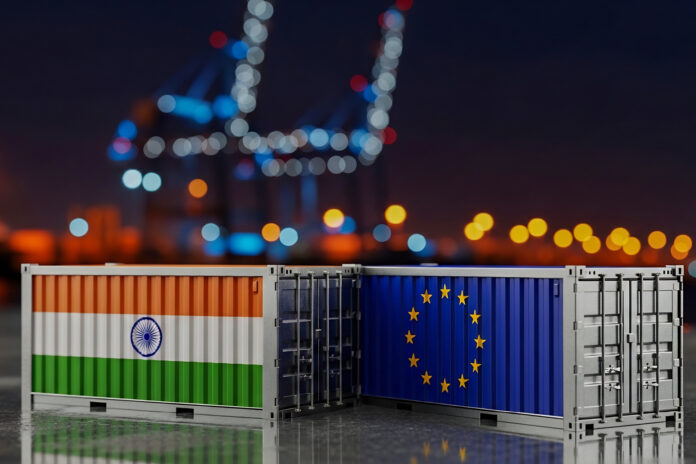
On 27 January 2026, the EU and India finalized a comprehensive free trade agreement after negotiations that had been ongoing since 2007. The agreement was described by European Commission President Ursula von der Leyen as the “mother of all deals”. It establishes a common free trade area encompassing around two billion people and covering almost one quarter of global economic output. However, the agreement still requires ratification by both the European Parliament and the Indian Parliament.
India will primarily reduce tariffs on automobiles, machinery, chemicals, agricultural products, and aircraft, while the EU will lower tariffs, inter alia, on Indian textiles, leather goods, seafood, jewelry, and toys.
Strategic significance of the agreement
The EU is gaining preferential access to one of the world’s fastest growing markets while simultaneously reducing its dependencies on China and the United States. The agreement comes at a time when Europe has to open up new markets, particularly in light of the recent increase in protectionist measures adopted by the United States.
India, in turn, is benefiting as its export industries have been significantly affected by US tariffs and are seeking alternative markets as a result.
In parallel with the new trade agreement, framework agreements on security, defense, and mobility were also concluded. These developments will strengthen the strategic partnership in the Indo Pacific region and promote investment in the technology, security, and digital sectors.
Core economic elements of the agreement
The EU gains:
- tariff reductions unprecedented in India’s trade policy, particularly for the automotive industry, mechanical engineering, chemicals, and pharmaceuticals;
- the simplification of customs and border procedures;
- improved rules on intellectual property and access to services markets.
India gains:
- near duty free access to the EU market for 97% of its export goods, including textiles, leather products, and jewelry.
Opportunities for EU industry – focus on Germany
Germany, as Europe’s largest industrial hub, stands to benefit in particular, as India is among the fastest growing automotive markets worldwide.
The agreement reduces India’s traditionally very high car tariffs, improves access to a market of more than 1.5 billion people, and strengthens the position of German automobile manufacturers (such as Volkswagen, BMW and Mercedes Benz) as well as their suppliers.
The European Commission expects India to grant tariff reductions amounting to approximately €4 billion per year for EU products, a substantial share of which will benefit the automotive and machinery sectors.
India is already one of the most important growth markets for German mechanical engineering companies. Under the agreement, tariffs on machinery and capital goods will be abolished or at least reduced, technical standards simplified, and customs clearance procedures shortened. This will significantly enhance the competitiveness of German industrial equipment in India.
Germany’s chemical industry will gain improved access to a market with strong demand for industrial raw materials and intermediate products. The agreement eliminates tariffs on chemicals and increases legal certainty with regard to intellectual property protection.
India is also investing heavily in aerospace technology. The agreement improves sales opportunities, for example, for Airbus components and German high tech suppliers.
In addition, India is opening parts of its services market, giving the EU greater access to IT services, cybersecurity, financial services, and maritime services. German engineering and technology companies are expected to benefit in particular.
As a result of these measures, India is gaining importance as an alternative to China in the semiconductor industry and in the renewable energy sector, particularly as a supplier of critical materials. Diversification across different markets reduces the geopolitical risk faced by German high tech industries.
Summary – what does the agreement mean for the EU and Germany?
The trade agreement with India delivers precisely what Europe needs at a time of US protectionism and Chinese dominance: Access to new markets, greater security of supply, reduced dependencies, and increased export opportunities.
The agreement represents a key step in strengthening Europe’s role as a global trading actor and enhancing its economic resilience vis à vis the United States and China.
Conclusion: EMPA and the EU-India Agreement from an EU perspective
From the EU’s perspective, both the EU-Mercosur Agreement (EMPA) and the EU–India Agreement mark decisive steps towards a more strategically autonomous trade policy. However, they differ significantly in terms of stability, political acceptance, and economic leverage.
The EU-India Agreement represents an exceptionally favorable opportunity for the EU to secure access to one of the world’s most dynamic growth markets. By eliminating tariffs on more than 90% of goods and with EU exports expected to double by 2032, it provides European companies – particularly in the industrial sector – with substantially improved competitive conditions. Moreover, the agreement strengthens the EU’s geopolitical resilience by reducing dependencies on the United States and China, and by consolidating a stable and strategically significant partnership in the Indo Pacific region. Political support for the agreement is broad, and implementation is likely to proceed swiftly.
By contrast, the EMPA constitutes an important but far more contentious step for the EU. While it offers substantial benefits in terms of market access and raw material security, particularly with regard to critical minerals, it remains politically highly controversial. Resistance from the European agricultural sector, sustainability concerns, and judicial review by the Court of Justice of the European Union are significantly delaying ratification. As a result, the EU is losing valuable time during which other actors, such as China, continue to expand their position in South America.
From a European perspective, the comparison is clear: while the EMPA represents a necessary but politically difficult strategy for securing raw materials and market access, the EU–India Agreement constitutes a rare strategic opportunity to achieve industrial, geopolitical, and economic gains simultaneously. In light of global upheavals, the EU can scarcely afford to block either agreement – yet the short to medium term potential of the EU–India Agreement is significantly greater.