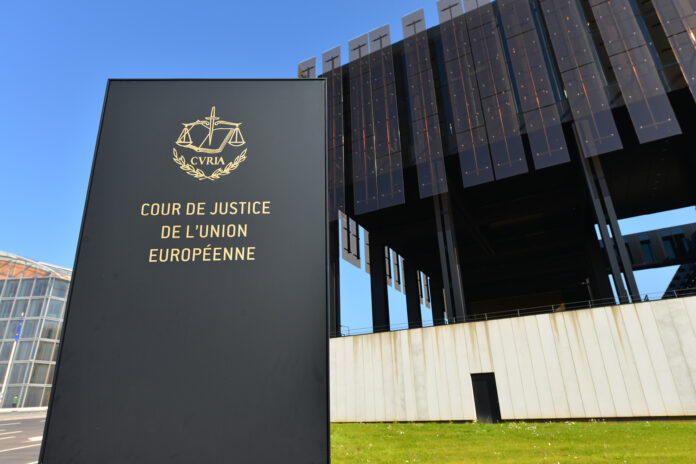
Following the reference for a preliminary ruling by the German Federal Court of Justice (BGH) in Karlsruhe on 11 February 2025 (Case No. KZR 74/23), the Court of Justice of the European Union (CJEU) heard oral arguments on 17 June 2026 in the Zapp case (C-347/25). Since such recourse is also relevant in other Member States, the significance of the ruling extends beyond Germany. The decision will fundamentally alter risk allocation, D&O insurance practice, and company-wide compliance strategies. Below, we outline how companies can already prepare for the upcoming ruling.
Whether companies can internally seek recourse for antitrust corporate fines from their management has been a matter of controversy for years and has led to different rulings by the courts.
In Germany, the corporate law framework for such recourse is provided by § 43 art. 2 of the German Limited Liability Companies Act (GmbHG) for limited liability companies and § 93 art. 2 of the German Stock Corporation Act (AktG) for stock corporations. For other legal forms, such as partnerships, recourse can be based on § 280 art. 1 of the German Civil Code (BGB). These provisions stipulate damages for breaches of the duty of care by management. Liability is unlimited; simple negligence is sufficient. Since the entry into force of the German Act on the Modernization of Partnership Law (MoPeG) and the elimination of previous liability privileges, this now also applies without limitation to partnerships.
An antitrust violation by a manager generally constitutes a breach of the duty of care, which causes a loss through the imposition of an antitrust corporate fine. From a corporate law perspective, the prerequisites for liability are thus met.
This corporate law perspective raises concerns in antitrust law. One argument against recourse is that it would undermine the purposes of the antitrust corporate fine. If a company could pass the fine on to management, and this were possibly covered by D&O insurance, the fine would fail its purpose: Penalizing the violation of antitrust law and skimming off the benefits obtained from the cartel.
Recently, the BGH addressed the internal recourse of antitrust corporate fines at the highest judicial level for the first time in the Zapp case. The stainless-steel processor Zapp sued its manager. His involvement in a price cartel had resulted in an antitrust corporate fine of approximately €4 million for the company – a sum the company is now claiming back in recourse from its manager.
The lower courts, the Regional Court (Landgericht, LG) of Düsseldorf (10 December 2021, Case No. 37 O 66/20) and the Higher Regional Court (Oberlandesgericht, OLG) of Düsseldorf (27 July 2023, Case No. 6 U 1/22 (Kart)), rejected liability for the antitrust corporate fine and the company’s defense costs in the fine proceedings so as not to undermine the penalizing purpose of the fine. The BGH, however, did not consider a restriction of the corporate law recourse necessary solely on the basis of German antitrust fining provisions, but saw potential conflicts with European antitrust law. Consequently, on 11 February 2025, the BGH decided to stay the proceedings and refer the question of the recoverability of antitrust corporate fines to the CJEU for a preliminary ruling.
The CJEU heard the referral at an oral hearing on 17 June 2026. During the hearing, the European Commission supported partial recourse, provided that the primary burden of the antitrust corporate fine remains with the company to maintain a deterrent effect. The Advocate General’s Opinion is expected in October of this year, with a final judgment by the CJEU likely arriving early next year. This time frame provides a valuable opportunity to analyze the potential outcome scenarios and their implications for affected businesses.
Scenario 1: CJEU allows recourse for antitrust corporate fines
The CJEU could rule that the prohibition of cartels (Art. 101 TFEU) does not preclude full or, in line with the Commission’s view, partial recourse for antitrust corporate fines, given that the deterrent purpose at the corporate level is already satisfied by the initial payment of the fine to the public authority.
Key impacts:
- Personal liability risk of management increases: In addition to antitrust corporate fines, competition authorities in Germany and other EU Member States (including France, the Netherlands, and Belgium) regularly impose personal fines and penalties against managers involved in cartel agreements. If companies are now allowed to reclaim the antitrust corporate fine from their managers, recourse against managers’ private assets could become an existential threat.
- D&O insurance: Many policies exclude coverage for personal antitrust fines as well as intentional breaches of duty. Even where the company makes claims against management due to an antitrust corporate fine, many providers do not grant insurance cover. Some providers do, however, include carve-back clauses for internal recourse in connection with fines, provided this is legally permissible. Should the CJEU classify internal recourse as permissible, many insurers with carve-back clauses are likely to critically review these conditions.
- Mandatory enforcement: Supervisory bodies and shareholders of the affected company must examine recourse claims against the relevant manager and, where necessary, bring suit – to avoid being held liable themselves for a breach of duty.
- Scope remains open: The judgment clarifies the question of recourse in the case of a manager’s own antitrust violations. The possibility of recourse remains unresolved for cases in which management has merely violated its duties of selection, instruction, and supervision towards other executives who commit an antitrust violation.
- Prevention: Even if recourse is possible, an effective compliance management system remains indispensable to protect companies from financial and reputational damage. In the case of high antitrust corporate fines, recourse will likely fall short of covering the full damage. Moreover, an effective compliance management system protects managers from significant personal liability risks.
Scenario 2: CJEU denies recourse for antitrust corporate fines
On the other hand, in order to preserve the sanctioning effect of antitrust corporate fines, the CJEU could decide against the possibility of recourse by companies against their management. Analogous to its case law on the tax deductibility of fines (cf. CJEU, 11 June 2009, Case C-429/07 — Inspecteur van de Belastingdienst/X BV), it could be argued that the fine must tangibly affect the company.
Key impacts:
- Risk remains with the company: The financial risk of the antitrust corporate fine remains with the company. A possibility of recourse against the manager is eliminated.
- All-clear for private assets – risks remain: While the threat of internal recourse liability is removed in this scenario, managers still face significant risk. The Federal Cartel Office (Bundeskartellamt), as well as competition or criminal authorities from other Member States, retains the power to impose personal fines or criminal penalties directly on executives (up to €1 million in Germany).
- Focus on contractual sanctions: Since recourse for antitrust corporate fines is blocked, the focus shifts to contractual sanctions, such as the retention or clawback of bonuses.
- Prevention: Without the possibility of recourse, establishing seamless antitrust compliance within companies remains one of the most important lines of defense.
What companies can do now
Regardless of whether the CJEU permits or rejects recourse for antitrust corporate fines, companies should already be setting the following strategic course:
- Auditing the compliance system: An effective compliance system is the best protection in both scenarios. If recourse is possible, strong prevention will save managers from personal liability in the first place. If recourse is eliminated, it is the most effective instrument to protect companies from bearing the sole burden of the fine.
- Amending executive contracts: Anchoring clawback clauses for bonus reclamation in the event of legal violations is strategically sound in both cases. If recourse is possible, such clauses complement the corporate law damage claims. If recourse is unavailable, they provide a viable financial sanction mechanism against managers.
- Reviewing D&O policies: A reassessment of coverage scope is advisable in both cases. If recourse is possible, the focus is on protecting recourse claims through carve-back clauses. If recourse is excluded, the focus shifts to ensuring coverage for defense, investigation, and public relations costs.
- Sharpening guidelines for internal investigations: The protocols for corporate internal investigations into suspected antitrust violations must also be reviewed. If recourse is declared admissible, investigations must be structured to document management breaches of duty in a legally admissible manner for subsequent litigation. If recourse is ruled out, the strategic focus shifts toward a corporate defense strategy, with investigations primarily serving to identify structural deficiencies and facilitate cooperation with competition authorities.
Whatever the CJEU decides on internal recourse for antitrust corporate fines, the ruling will carry far-reaching consequences for companies and their management boards across the EU.